 Ultimate guide
Beverly Hills Real Estate: A Guide to Buying and Selling
Last Updated: November 28, 2026
Quick Summary
Beverly Hills real estate is the residential property market within the incorporated city of Beverly Hills, California, covering single-family estates, condominiums, townhomes, and lease properties across a compact grid of distinct neighborhoods. The market rewards preparation over speed.
- Confirm whether a parcel sits inside the incorporated city or the surrounding County of Los Angeles area, since permits and schools follow that line.
- Verify permit history with the city's planning or building department, as unpermitted additions are common in older housing stock.
- Property taxes are assessed under California's Proposition 13 framework, with a base year value that resets on sale.
- Get insurance quotes before you remove contingencies, because wildfire exposure affects premiums on hillside and high-value homes.
- School assignment depends on the exact address, with the boundary between Beverly Hills Unified and Los Angeles Unified running through the area.
Table of Contents
- Beverly Hills Real Estate: What Defines the Market
- Beverly Hills Homes for Sale: Reading Listings and Photos
- Beverly Hills Neighborhoods and What Each One Offers
- Home Prices, Asking Prices, and Ownership Costs
- Buying a Home in Beverly Hills: Process and Transaction Costs
- Selling a Home in Beverly Hills: Pricing and Negotiation
- Schools, Amenities, and Everyday Lifestyle
- Evaluating a Luxury Property and Investment Potential
- Planning Your Next Move in Beverly Hills Real Estate
- Frequently Asked Questions
Beverly Hills Real Estate: What Defines the Market
Beverly Hills real estate occupies a category of its own, even within Los Angeles County. The market is small in inventory, expensive to enter, and governed by a city with its own planning department, its own building rules, and its own expectations about how a property should look and function. The first thing buyers should understand is that the address matters less than the jurisdiction. A home inside city limits answers to a different permitting authority than one a few blocks away in the City of Los Angeles, and that difference shows up in timelines, taxes, and school assignments.
Beverly Hills real estate is the residential property market within the incorporated city of Beverly Hills, California, covering single-family estates, condominiums, townhomes, and lease properties across a compact grid of distinct neighborhoods. The market rewards preparation over speed.
Luxury Homes, Estates, and Property Types
Inventory splits into a few clear buckets. Single-family estates dominate the flats and the hillside streets, ranging from original mid-century houses to newly built designer homes. Condominiums and townhomes cluster nearer the commercial corridors and suit buyers who want walkability. Penthouses and villas sit at the top of the lease market, often used as luxury retreats or vacation homes by owners who keep a primary residence elsewhere.
What most guides miss is how much the property type shapes your negotiating position. A dated estate on a good lot is a different transaction than a turnkey designer home on the same block. One invites renovation risk, the other invites competition.
Beverly Hills Homes for Sale: Reading Listings and Photos
Start with the asking price, then ignore it. Asking prices in this market are opening positions, and a listing's real information lives in its property details: lot size, year built, permit history, and how recently the photos were taken.
Reading Beverly Hills homes for sale well means noticing what the listing does not show. A common mistake is falling for staged interiors while skipping the exterior shots, the roofline, and the foundation line. Wide-angle photography flatters small rooms and hides awkward layouts.
A practical checklist for evaluating any listing:
- Compare the photo dates to the listing date
- Request the permit history for any addition or remodel
- Check whether the square footage matches public records
- Ask which fixtures and appliances convey with the sale
- Confirm the school district for the exact parcel
- Visit at a different time of day than the open house
When you are ready to browse, you can view current listings and compare property specifics side by side.
Beverly Hills Neighborhoods and What Each One Offers
Most listing pages treat the city as a single search filter. In practice, buyers shortlist by micro-neighborhood, because lot size, walkability, privacy, sun exposure, and price band shift block by block. Below is a practical comparison of the areas buyers ask about most, framed by the trade-offs that actually drive offers.
The Flats (south of Santa Monica Boulevard). This is the grid of tree-lined streets between Santa Monica Boulevard and the southern city limit. Streets vary from quiet residential blocks to busier through-streets, so parking and noise change quickly.
The Hillside Areas (north of Sunset Boulevard). Slope, drainage, access, and wildfire exposure are variables to review on hillside properties. Verify geotechnical reports and drainage history before committing.
Condo and Townhome Corridors. HOA dues, reserve studies, and building age are important considerations for condominium and townhome purchases. Read the HOA budget and reserve study carefully.
A home a few blocks away can sit in a different permitting jurisdiction and a different school district. That line affects timelines, taxes, and school assignment, so confirm the parcel's jurisdiction before you shortlist.
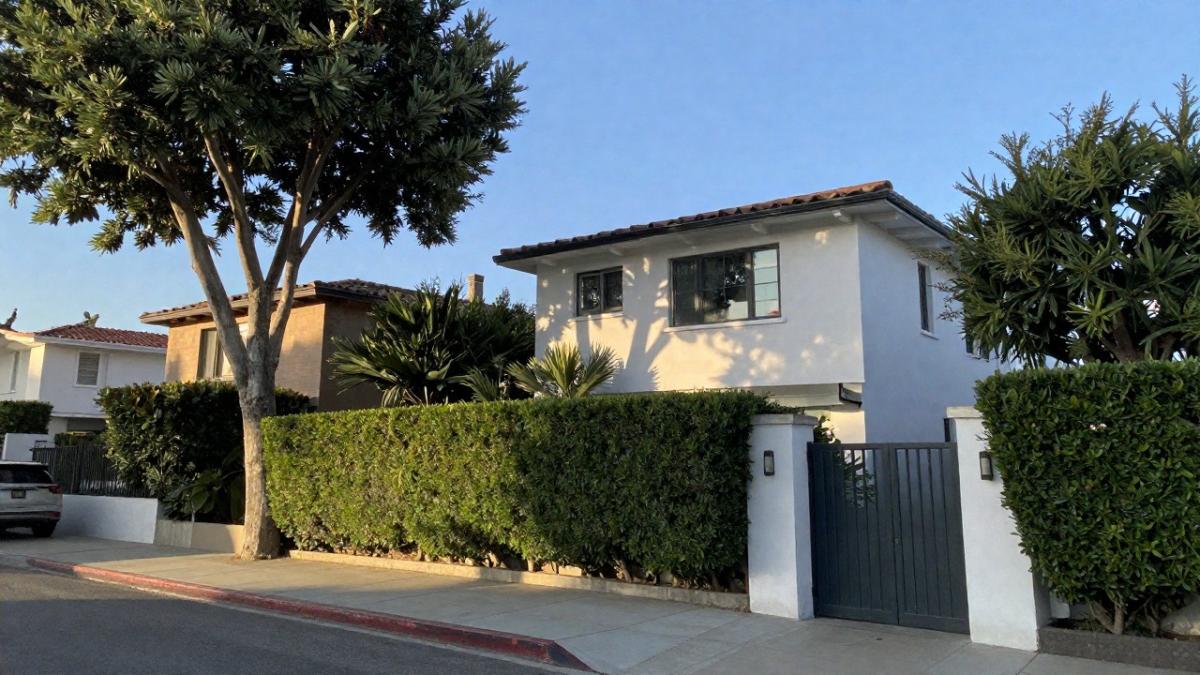
Street-to-street variation in noise, parking, and sun exposure is real, and only a site visit reveals it. For a fuller overview, explore the neighborhoods before you shortlist.
Watch out: a listing's neighborhood label can be broader than the parcel's actual jurisdiction and school assignment. Verify both against public records for the exact address, not the marketing description.
Buyers shortlist by micro-neighborhood, so here is how the areas the article covers compare.
| Area | Location | Key considerations |
|---|---|---|
| The Flats | South of Santa Monica Boulevard | Parking and noise change quickly street to street |
| Hillside Areas | North of Sunset Boulevard | Slope, drainage, access, wildfire exposure; verify geotechnical reports |
| Condo and Townhome Corridors | Near commercial corridors | HOA dues, reserve studies, building age |
Home Prices, Asking Prices, and Ownership Costs
Prices vary enormously by property type and location, so treat any single figure as a starting point rather than a benchmark. What you can plan for is the ownership cost layer that sits on top of the purchase price.
- Property taxes: assessed annually under California's Proposition 13 framework, with a base year value that resets on sale. Verify current rates with the county assessor.
- Insurance: hillside and high-value homes often need specialized coverage, and wildfire exposure affects premiums.
- Maintenance: mature landscaping, pools, and older systems carry real annual costs.
- HOA dues: relevant for condominiums and townhomes, and worth reading line by line.
Watch out: buyers routinely budget for the purchase and forget the first-year carrying costs. Get insurance quotes before you remove contingencies, not after.
Buying a Home in Beverly Hills: Process and Transaction Costs
Buying here follows the standard California purchase sequence, but the diligence layer is heavier and the jurisdiction question shapes everything downstream. Here is the practical sequence and where the costs land.
1. Pre-approval and proof of funds. In a competitive market, sellers weigh financing strength alongside price. A lender pre-approval letter and documented down payment matter, and all-cash offers still carry weight on high-value properties. Get pre-approved before you tour, not after.
2. Offer and negotiation. California residential purchase agreements typically include contingency periods for inspection, appraisal, and loan approval. Contingency windows are negotiable, and shortening them can strengthen an offer but shifts risk to you. Review the seller's disclosures, transfer disclosure statement, and any natural hazard or environmental reports before you remove contingencies.
3. Inspections and permit verification. Commission general, structural, and specialty inspections as needed. Separately, confirm the property's permit history with the city's planning or building department. Unpermitted additions or remodels are a common issue in older housing stock and can affect financing, insurance, and resale. This is the step buyers most often underweight.
4. Escrow and title. A neutral escrow handles funds and documents, and title insurance protects against ownership claims. Title searches can surface easements, boundary issues, or recorded restrictions that affect how you can use the property.
5. Closing and recording. Once contingencies clear and loan documents are signed, the deed is recorded and possession transfers per the contract terms. Rent-back arrangements are negotiable and should be documented in writing.
Transaction cost categories to budget for:
- Escrow fees, split per the contract
- Title insurance premiums and endorsements
- Recording and transfer fees
- Lender origination and appraisal charges if financing
- Inspection and specialty report fees
- HOA transfer fees and document costs for condominiums and townhomes
The jurisdiction wrinkle. Confirm early whether the parcel sits inside the incorporated city or in the surrounding County of Los Angeles area. Permits, services, and school assignment follow that line, and a property near the boundary can answer to a different authority than its neighbor. This affects timelines and can affect insurability.
Ownership costs to line up before closing. Property taxes are assessed under California's Proposition 13 framework, with a base year value that resets on sale, so a buyer's tax bill can differ materially from the seller's. Insurance for hillside and high-value homes often requires specialized coverage, and wildfire exposure affects premiums. Get insurance quotes before you remove contingencies, not after.
Our buyer's guide walks through the sequence and the cost categories in order.
Watch out: removing inspection or appraisal contingencies to win a bidding war shifts risk to you, and unpermitted work discovered after closing can be expensive to cure. Verify permits and insurance before you commit.
Selling a Home in Beverly Hills: Pricing and Negotiation
Pricing is where listings succeed or stall.
Negotiating strength generally comes from preparation, including pre-inspections and clean permits. If you want the full pricing and negotiation framework, read our seller's guide.
Schools, Amenities, and Everyday Lifestyle
School assignment depends on the exact address, and the boundary between Beverly Hills Unified and Los Angeles Unified runs through the area. Families should verify assignment for a specific parcel rather than trusting a listing description.
Everyday lifestyle is the quieter selling point. Walkable retail and dining, proximity to cultural institutions, and short commutes to the Westside's employment centers all shape daily life. Buyers who plan to lease the property out should weigh the same factors, since tenant demand tracks walkability and school access closely.
Evaluating a Luxury Property and Investment Potential
A luxury property needs two separate evaluations: what it is worth to live in, and what it is worth to hold. Those answers diverge more often than sellers expect.
For investors, rent potential and neighborhood trend matter more than finishes. A renovated house on a street with rising demand beats a perfect interior on a street that has plateaued. For owner-occupants, construction quality matters more than cosmetics. Fresh paint over a failing roof is a cosmetic fix; a new roof is a real one.
Planning Your Next Move in Beverly Hills Real Estate
Inventory moves, prices shift, and the details that decide a good outcome are the ones you check early.
If you are ready to price a property or plan a move, request a home valuation and we will walk you through the numbers.
Robert Castle works with buyers, sellers, and landlords across Beverly Hills, West Hollywood, Hollywood Hills, Brentwood, and the greater Los Angeles area. Get started with Robert Castle and move forward with a clear plan.
Frequently Asked Questions
Is Beverly Hills an expensive place to live?
Yes. Beverly Hills real estate carries some of the highest asking prices in the Los Angeles area, and ownership costs add to that. Beyond the purchase price, budget for property taxes, insurance, landscaping, pool and security maintenance, and HOA dues where they apply. Buyers should request a full cost breakdown from their agent before making an offer so the monthly figure reflects everything, not just the mortgage.
What should buyers know before purchasing a luxury home in Beverly Hills?
Start with jurisdiction. Some properties sit in the City of Beverly Hills and others fall under Los Angeles County or the City of LA, and that changes permits, taxes, and school districts. Order inspections that go beyond the cosmetic: roof, foundation, drainage, and pool systems matter more than staging. Ask for disclosure packages early, confirm title and easements, and have your agent pull comparable sales so the asking price is tested against real closed deals.
How do buyers compare Beverly Hills listings?
Compare on specifics, not photos. Line up price per square foot, lot size, year built, renovation history, and days on market for each Beverly Hills homes for sale candidate. Then weigh location factors: school district, street traffic, hillside versus flat lot, and proximity to amenities. A side-by-side sheet built with your agent keeps the comparison honest and stops a well-staged property from outshining a better-built one.
What should sellers consider before listing a Beverly Hills home?
Pricing strategy decides how the listing performs. An inflated asking price can leave a property sitting while newer inventory draws attention. Before listing, gather recent comparable sales, decide which repairs genuinely add value versus which are cosmetic, and prepare professional photos and a clear property description. Sellers should also confirm which jurisdiction governs permits and disclosures, since that paperwork affects timelines and buyer confidence.
What due diligence should buyers complete before closing on a Beverly Hills property?
Complete physical, legal, and financial checks. That means a general inspection plus specialists for roof, foundation, drainage, and pool systems; a title search and review of easements or encroachments; confirmation of zoning and permit history with the correct jurisdiction; and a review of HOA documents where applicable. Buyers should also verify insurance availability and cost before removing contingencies, since hillside and high-value homes can be harder to insure.
What types of homes are available in Beverly Hills?
Inventory spans a range of property types, including single-family homes, condos, and townhomes. Buyers should decide early whether they want a flat lot with lawn space, a view property, or a low-maintenance condo, because that choice narrows the search faster than any other filter.
